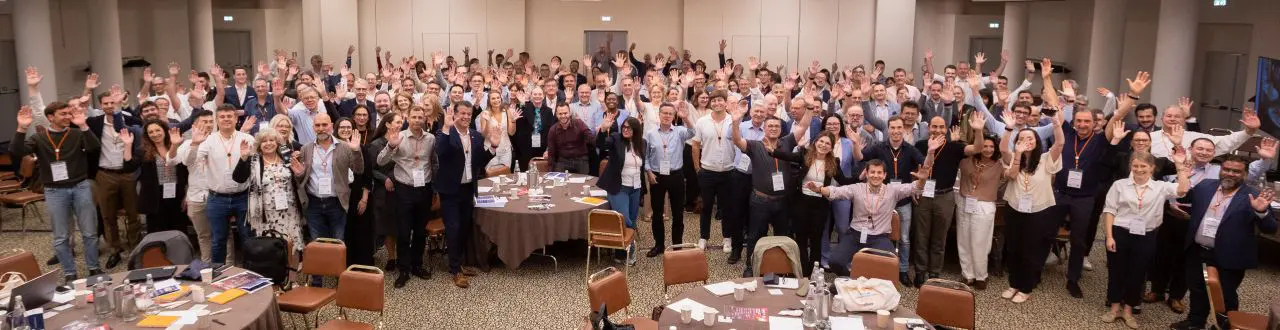
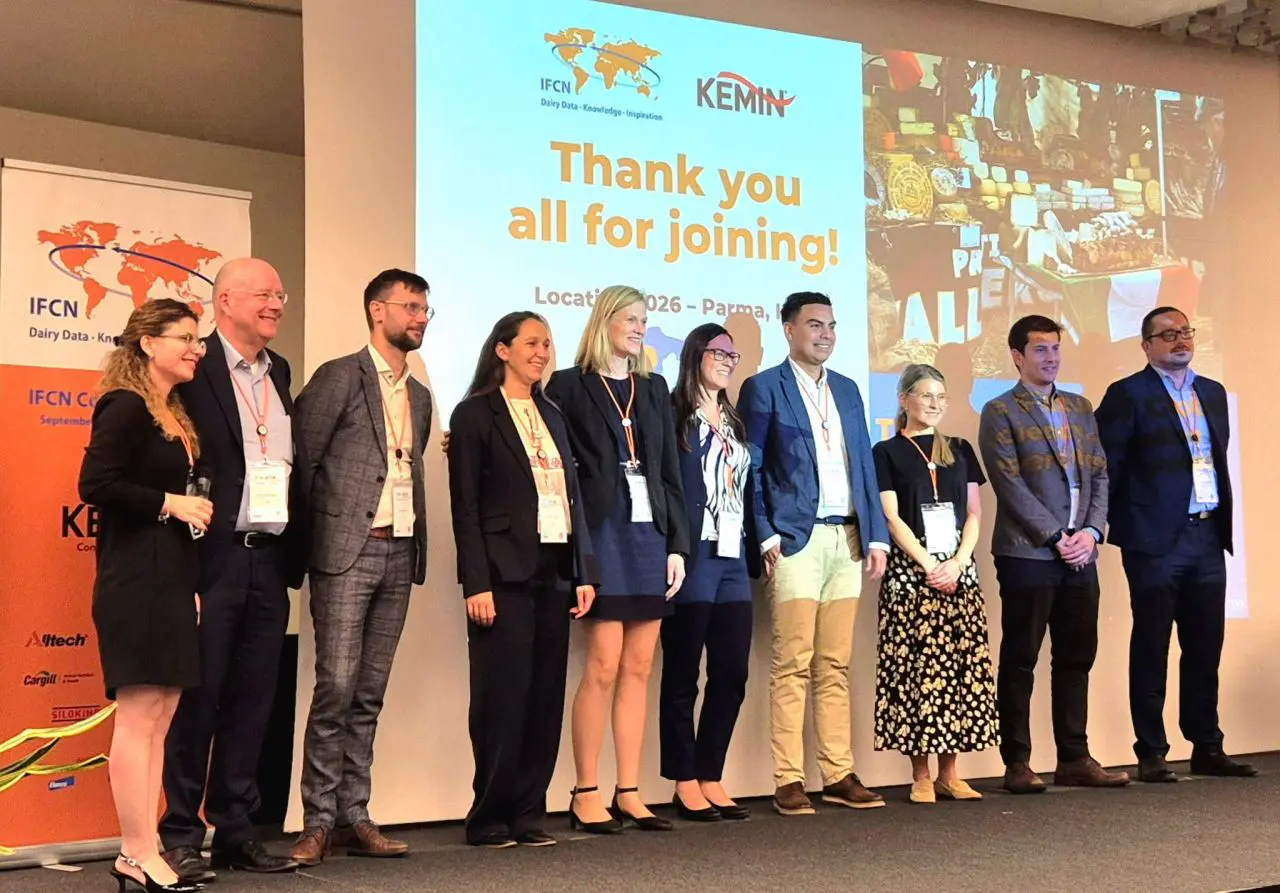
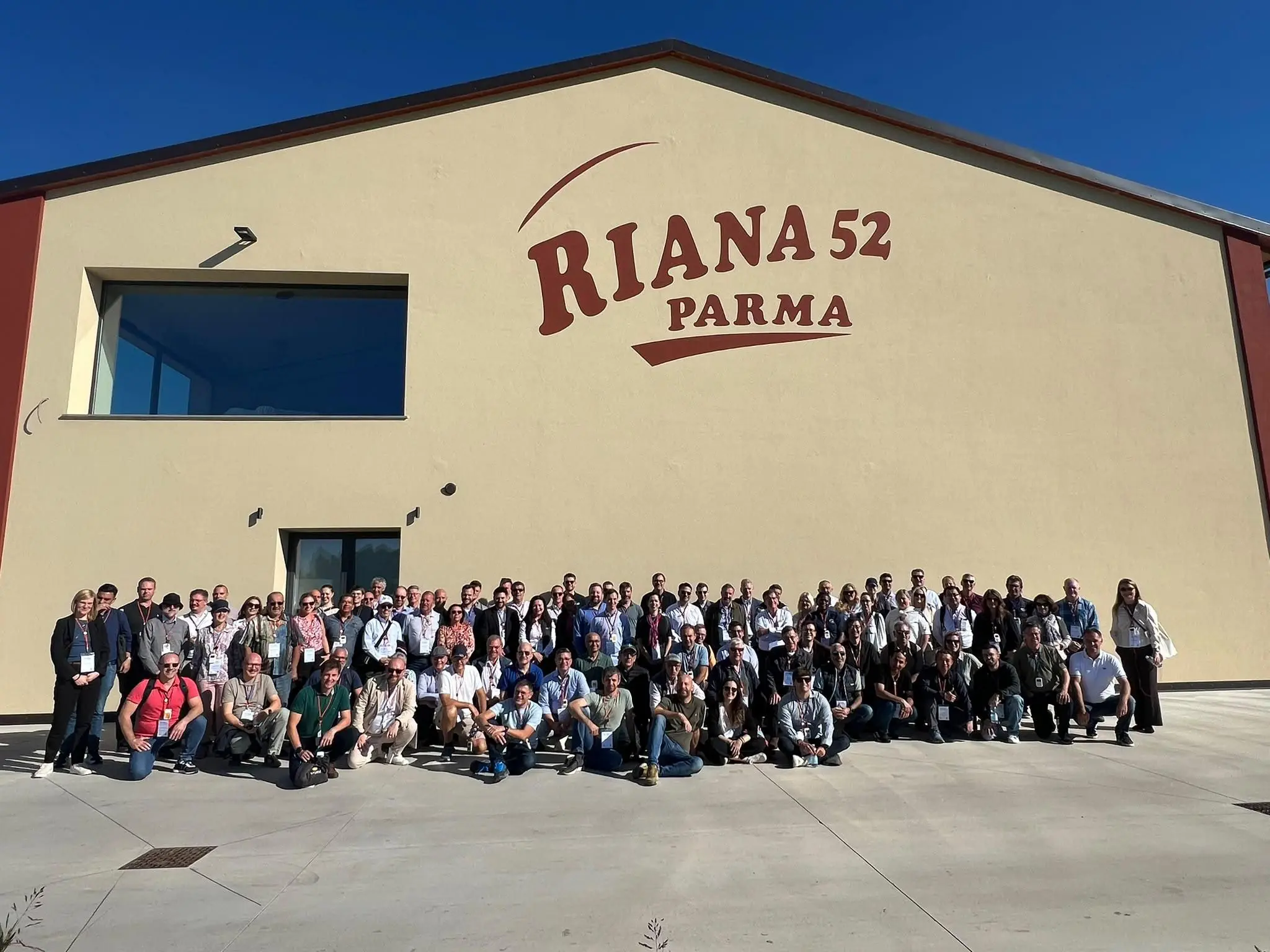
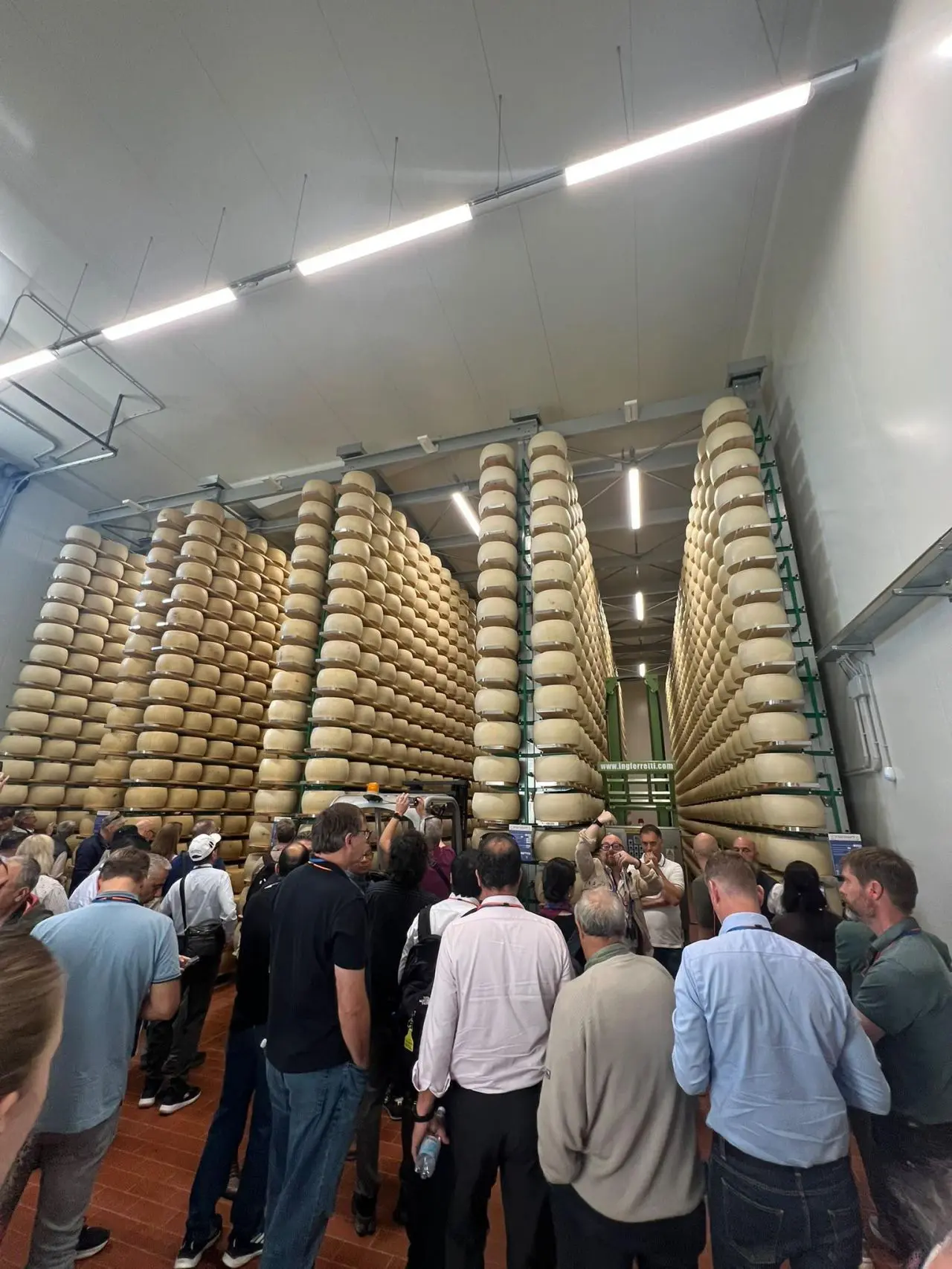
More than 200 dairy professionals – farmers, processors, researchers, farm input suppliers and industry leaders – met in Parma, Italy, from 27 to 30 September 2026 for the IFCN Conference 2026. Under the theme “The Future of Global Dairy: Efficiency, Innovation & Cooperation in a Volatile Market”, the entire IFCN network came together in one conference for the first time, connecting global dairy data, farm-level realities and market outlooks. The key message: dairy market volatility is here to stay, and dairy farm efficiency is the strongest lever to manage it.
Day 1: Global Dairy Market Outlook – Volatility Is the New Normal
Opening the conference, IFCN Managing Director Łukasz Wyrzykowski stressed the importance of turning reliable dairy data into better decisions across the entire supply chain.
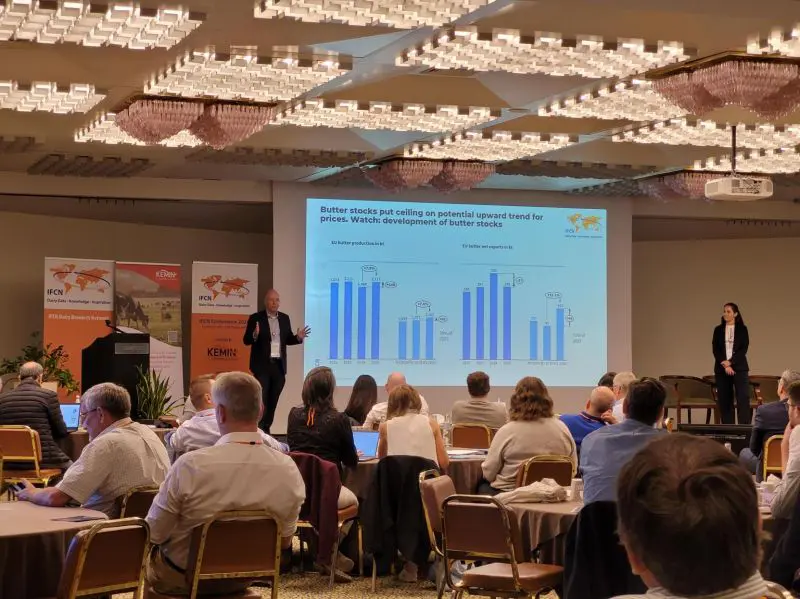
Hubertus Gay (OECD) explained that long-term dairy market trends are increasingly shaped by climate and population growth, while short-term price fluctuations are becoming harder to predict. His advice to the industry: “Embrace volatility.” Andrea Lendewig, Head of Research & Development at IFCN, added that the exceptional global milk supply growth of 2025 has lost momentum in 2026. Dairy demand remains supportive and increasingly diversified, but climate risks, weaker farm economics and geopolitical uncertainty are making volatility a permanent feature of the market.
Alberto Menghi (CRPA) showed how Italy creates value through processing and premium cheese, with future competitiveness depending on exports, labour availability and water. Pietro Paganini argued that the sector’s challenge is not producing milk but communicating dairy’s value for food security and nutrition. Deepak Dubey and Mohammad Al Rifai (Kemin) demonstrated how precision nutrition – optimising feed efficiency, amino acid balance and nutrient use – increases dairy farm profitability while reducing nutrient losses and environmental impact.
The closing panel agreed that businesses must plan for the long term while staying flexible. As Alberto Menghi put it: “Farmers and processors need to plan for the next 10 years, while recognizing that market volatility will continue.”
Day 2: Dairy Farming Systems Worldwide – From Global Trends to Farm-Level Solutions
Katrin Friedrichs and Gabriel Sarmiento (IFCN) presented a global overview of dairy farming systems, showing that long-term competitiveness increasingly depends on productivity, efficiency and the ability to adapt to structural change. Regional experts confirmed this picture: Hugo Quattrochi described consolidation and intensification in Argentina, Uruguay, Chile and Brazil; Paidamoyo Chadoka outlined Zimbabwe’s investments in water security, renewable energy, genetics and climate-smart technologies; and Tieu Duc Viet reported that Vietnamese dairy farmers remain optimistic and are finding practical ways to adapt to high temperatures.
From New Zealand, Matthew Newman stressed that future growth must come from value creation rather than volume: “Every region should understand its natural advantages, protect them, and build value around them.” Ernesto Reyes (Global Dairy Platform) highlighted dairy’s role in jobs and livelihoods: “Employment is the most important indicator to achieve resilience.” Italian dairy farmer Pietro Baldrighi named climate change, water availability and generational renewal as key challenges, while Simona Caselli, President of Granlatte Granarolo Group, showed how the cooperative model shares added value between farmers, processors and consumers.
Industry partners Alltech, Bayer, Lallemand, smaXtec and Cargill showed how data, technology and collaboration improve decision-making on dairy farms. Patrick Gerlich (Bayer) explained that efficiency starts with genetics, crop management and feed quality, because “sustainability starts before the cow eats.” Luis Queirós (Lallemand) presented a whole-farm approach built on silage quality, feed efficiency and nutrient recycling: “We try to work with nature and not against it.” Charlie Sheppy (smaXtec) showed how real-time animal data helps farmers detect heat stress earlier, and Celeste Grande (Cargill) introduced Herd Lifetime Productivity, a holistic approach to unlocking a herd’s genetic potential.
Tara McCarthy summed up the spirit of the day with the concept of “coopetition” – cooperation combined with competition – noting that “coopetition requires trust.” Participants agreed that efficiency, resilience and sustainability are closely linked, and that no single company can tackle future challenges alone.
Day 3: Dairy Roadmap 2035 – Feed Efficiency as the Biggest Lever
The final day, opened by the Kemin–IFCN Dairy Efficiency Session, focused on how the dairy industry can meet growing global demand while becoming more resilient. Milica Kocić and Expedito Netto (IFCN) used global farm data and modelling to show that higher productivity, feed efficiency and better resource use strengthen the economic, environmental and social sustainability of dairy farming. Michel de Haan presented long-term research showing that better protein efficiency significantly reduces nitrogen losses without compromising animal performance. Heather White, Kelly Nichols and Bram Pauwelyn confirmed that precision protein nutrition benefits farmers, consumers and the environment alike.
In a workshop, participants then co-created a Dairy Roadmap 2035, setting priorities for efficiency, sustainability and long-term competitiveness, with reliable data, practical solutions and stronger value-chain collaboration at its core.

Dairy Market Outlook: Slower Milk Supply Growth, Strong Demand for Cheese and Dairy Protein
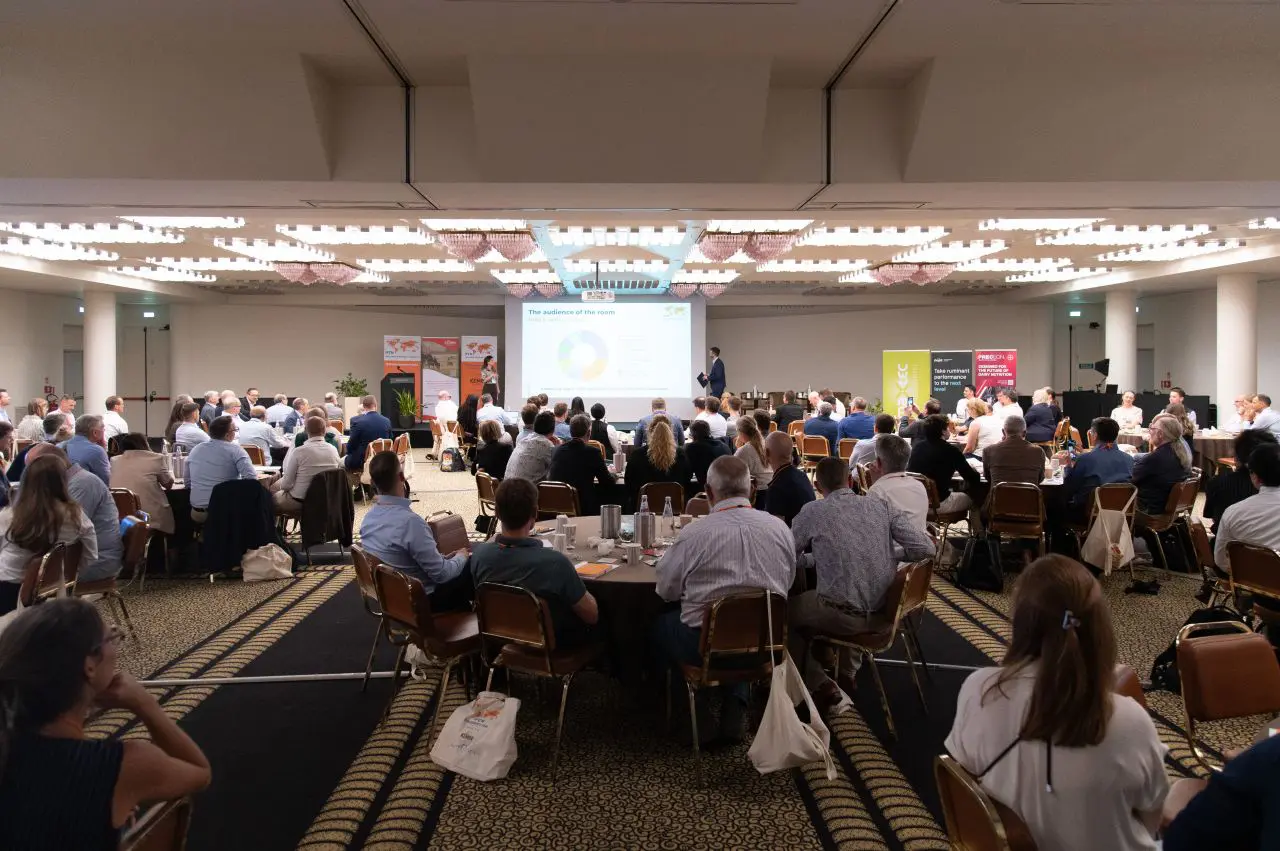
According to the IFCN long-term dairy outlook presented by Milica Kocić and Erik Elgersma, the sector faces slower milk supply growth, rising climate risks and continued geopolitical uncertainty, while strong long-term demand in import-dependent regions keeps creating opportunities for efficient producers. Eric Meyer (HighGround Dairy) analysed the recent surge in US milk production, driven by herd expansion, higher milk components and processing investment, but warned that feed costs and weather risks may limit further growth. Tom Booijink (Rabobank) identified rising incomes, urbanisation, convenience and health trends as drivers of growing global demand for cheese and dairy proteins.
In the final outlook panel, Patrick Gerlich summarised: “Feed efficiency is the biggest lever on the farm.” Luis Queirós added: “Nothing regarding sustainability matters if we cannot create a profitable environment.”
Next IFCN Conference: Mexico, October 2027
The next IFCN Conference will take place in Mexico in October 2027. Would you like to become a sponsor of the IFCN Conference in Mexico? Please contact us at sales@ifcndairy.org.
UNLOCKING THE POWER OF DAIRY INTELLIGENCE
Built to empower industry peers with trusted insights to shape smarter, faster and more impactful decisions for the future of dairy