On March 25, 2026, we hosted the third monthly researcher meeting of the year at IFCN—packed with insightful discussions and inspiring ideas. A standout presentation came from Enock Ndaki:
“The Dairy Industry in Tanzania: Untapped Potential of the ‘White Gold’ Sector”
The March Speaker
Enock Ndaki | Tanzania


Research Assitant, National Instutute for Medical Research (NIMR)
Veterinary Doctor and food safety expert with a stron dedication to advancing public health in Tanzania.
BVM at Sokoine Univeristy of Agriculture, Msc Food Safety and Risk Analysis at the Univeristy of Zambia
Key Dairy Sector Facts in Tanzania
Turning Challenges into Opportunities
Tanzania’s livestock sector grapples with animal diseases, limited access to improved breeds, and inefficient farming practices. With targeted policies, investments, and farmer support, these can become growth drivers via better genetics, optimized feeding, stronger farm management, and robust animal health services.
Strengthening Local Dairy Production
Despite a massive livestock population, Tanzania relies on imports due to quality issues, poor infrastructure, and limited farmer training. Bridging these gaps builds trust in local milk, enhances nutrition, and powers the domestic dairy market.
Africa is rich in resources and in dairy challenges. These challenges are opportunities to improve herd management and boost productivity
Tanzania Dairy Sector Insights:
-
Market Size & Growth: Tanzania’s dairy sector produces ~3.5 billion liters annually (2024 est.), with 75% from smallholder farms. Demand grows 5-7% yearly due to urbanization and rising incomes, per FAO data.
-
Key Stats: 25 million cattle (world’s 12th largest herd), but yield averages just 2-3 liters/cow/day vs. global 6-10 liters—huge efficiency gap. Imports hit $100M+ yearly for milk powder.
-
Opportunities: Cooperatives like Tanga Fresh have scaled processing 300% since 2015. Tech like mobile vet apps and AI feed optimization could double yields. Government targets 50% import reduction by 2030 via subsidies.
-
Challenges Ahead: Climate variability cuts forage 20%; aflatoxin contamination risks exports. Solutions: Climate-resilient breeds and blockchain traceability.
These insights position Tanzania as Africa’s rising dairy powerhouse—perfect for investor or researcher interest.
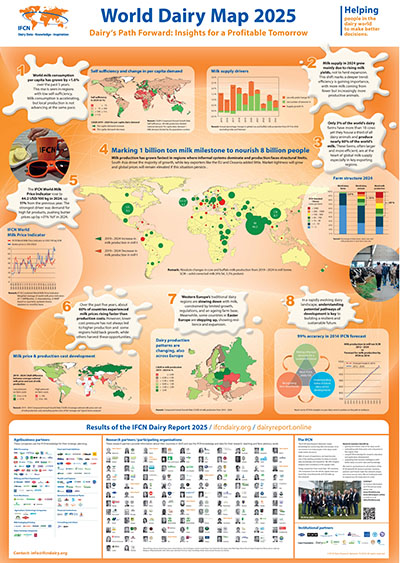
GET THE IFCN WORLD DAIRY MAP FOR FREE!
The latest version of the World Dairy Map in digital format.
- Dairy demand worldwide and trade developments
- Milk production and processing profile
- Monthly milk production changes
- Costs of milk production
- World milk price