Argentina’s dairy sector likes to describe itself as resilient. And it is. But resilience alone does not create value. After decades of economic instability, the industry has perfected survival — now it faces a more uncomfortable question: Is it ready to transition from endurance to intentional growth?
At farm level, the fundamentals are hard to ignore. Argentina produces milk at some of the lowest costs globally, backed by abundant land, flexible land-use systems, and operators who have learned to manage risk the hard way. Producing milk at 25–30 eurocents per kilogram is not a theoretical advantage – it is a structural one. In a world obsessed with efficiency and sustainability, Argentina already has what many regions are trying to build.
Yet this strength exposes a paradox. Low costs have masked underinvestment. Roads, tracks, feed pads, and basic infrastructure are missing not because they are unaffordable, but because uncertainty made long-term thinking irrational. The result: systems that work – until the weather turns, logistics fail, or climate risk materializes. Resilience has limits, and climate volatility is testing them fast.
Efficiency Without Optimization
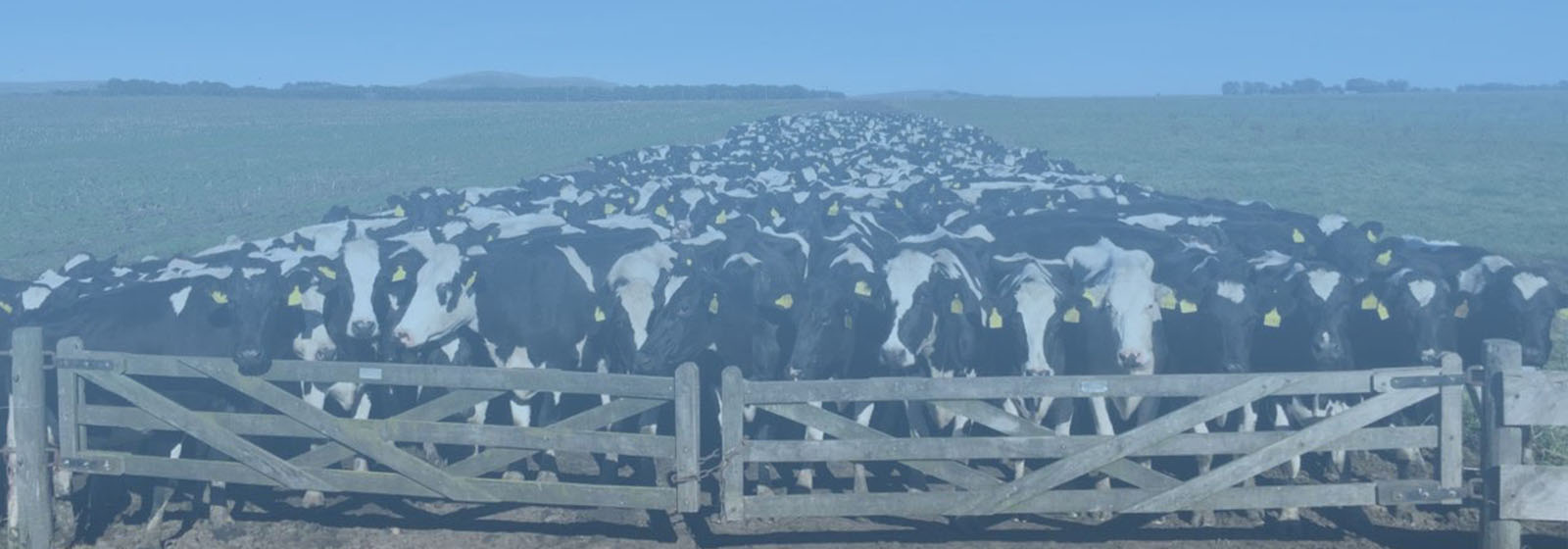
Technically, Argentina runs one of the most unusual dairy systems in the world: high-output Holstein herds, largely grass-based, no housing, limited infrastructure, and strategic supplementation that makes economic sense due to low feed prices. It works. But it also raises uncomfortable questions.
Cows with high genetic potential operate below their optimum, infrastructure inefficiencies cause wastage, and animal welfare risks may grow over time. This is not a broken system — it is an unfinished one. Modest, targeted investment could lift productivity, reduce risk, and improve welfare without destroying the low-cost advantage. The return on capital here would likely outperform many “high-tech” dairy investments elsewhere.
The northern regions illustrate a different tension. Housed, US-style systems offer stability and climate protection, producing level milk profiles processors value. But they come at higher cost. The real question is not whether these farms can compete globally, but whether the Argentine supply chain is willing to reward reliability over raw cheapness.
17
February
IFCN free public webinar | February 17, 2026 15:30 CET
Creating Value in Argentina’s Dairy Supply Chain:
Opportunities & Threats Under Milei’s Reforms
Processors: The Weakest Link?
If farms are resilient, processors are exposed. The processing sector is fragmented, crowded, and structurally inefficient. Informal operators still account for a meaningful share of volume. Contracts are weak, logistics are stretched, and supplier relationships appear transactional rather than strategic.
For years, processors have managed returns by pushing pressure back to farmers in a dysfunctional market environment. That strategy worked under instability. It will not work under competition.
Despite exporting around 30% of output, many processors lack global market understanding and remain regionally focused. In a liberalizing, stabilizing economy, this becomes a liability. If capital returns, processors are the most likely disruption point – not dairy farms. New entrants with capital, supply chain discipline, and sustainability-driven sourcing models could rapidly reshape milk flows.
The current system resembles a “wild west”: many players, weak coordination, and latent value everywhere. That is an opportunity, but only for those willing to impose structure.
The Missing Ingredient: Capital With Intent
Argentina does not lack natural resources, labor, or technical capability. What it lacks is functional access to finance. Years of instability have hollowed out conventional lending, leaving farmers debt-free but capital-starved. This has preserved resilience but capped ambition.
If economic stabilization holds, finance will not just enable growth, it will redefine power dynamics across the supply chain. Banks, investors, and strategic partners will decide whether Argentina remains a low-cost raw milk supplier or evolves into a coordinated, value-driven dairy origin with global relevance.
A Choice, Not a Fate
Argentina’s dairy sector is often framed as “full of potential.” That understates the moment. The sector is ready – but readiness does not guarantee action.
The next phase will reward those who move first: investors who understand low-cost systems, processors who commit to structured supply chains, and policymakers who recognize that resilience is a foundation, not a strategy. Argentina does not need to reinvent its dairy industry. It needs to decide what kind of one it wants to be.
The window is open. It will not stay that way forever.
Author: Amelie Kölbl (January 2026)
Reserve your spot today
Join a focused, data-driven session designed specifically for agribusiness leaders, processors, and input suppliers who want to understand what is really changing in Argentina’s dairy market. Milei’s pro-market reforms, lower inflation, and improved access to financing are already reshaping margins, investment decisions, and export competitiveness across the dairy value chain. At the same time, shifting export taxes, deregulation, and rising production introduce new volatility, forcing producers and processors to rethink risk management and long-term strategy.